Comparison · 2026
Pioneer vs Senville: Which Mini Split Brand Wins for DIY Homeowners?
Opinion: The rankings in this article are the opinion of the author.
If you're researching pioneer vs senville mini split options for a budget ductless system in 2026, you're comparing two brands that look similar on paper but differ a lot in how they expect you to handle installation. Both can be cost-effective alternatives to premium brands like Mitsubishi, both use manufacturing from major factories like Midea, and neither sells a true plug-and-play, pre charged quick-connect system the way some other DIY mini split brands do. For a homeowner who wants to do as much of the work as possible, the real question is which one creates less friction - and which one delivers better specs for the money.
The short answer: For a cost-focused homeowner who is wondering about self-install, Senville would usually be the better pick. Its equipment prices start lower, its cold-climate Aura series specs are stronger, and its warranty documentation - while still requiring a licensed tech for refrigerant work - is seen as less harsh than Pioneer's. If you're hiring an HVAC contractor anyway or you already own pro-grade tools and know how to use them, Pioneer is a good choice because it has detailed installation manuals and solid parts availability that help with a by-the-book install. We break down the price, the efficiency, how hard the DIY is, the warranty coverage and the product range below so you can decide which one fits your situation.
What Is Pioneer in the Mini Split Market?
Since 1995, Pioneer has been making mini splits and has built a long track record in the U.S. as a source of ductless systems that don't cost a lot. Operated by Parker Davis HVAC International, the company focuses on single-zone and multi-zone heat pumps sold widely through online retailers to homeowners and small contractors who want reliable equipment without paying what Mitsubishi units cost.
-
Including ceiling cassettes and floor units, Pioneer has a wider choice of specialized mini-split forms than Senville
-
Detailed, step-by-step installation manuals with exact specs for wall penetration, drain slope and evacuation
-
Entry-level prices that compete with other brands, often under $1,000 for a 12,000 BTU single-zone unit
-
With Pioneer, models with SEER ratings over 24 are hard to find
-
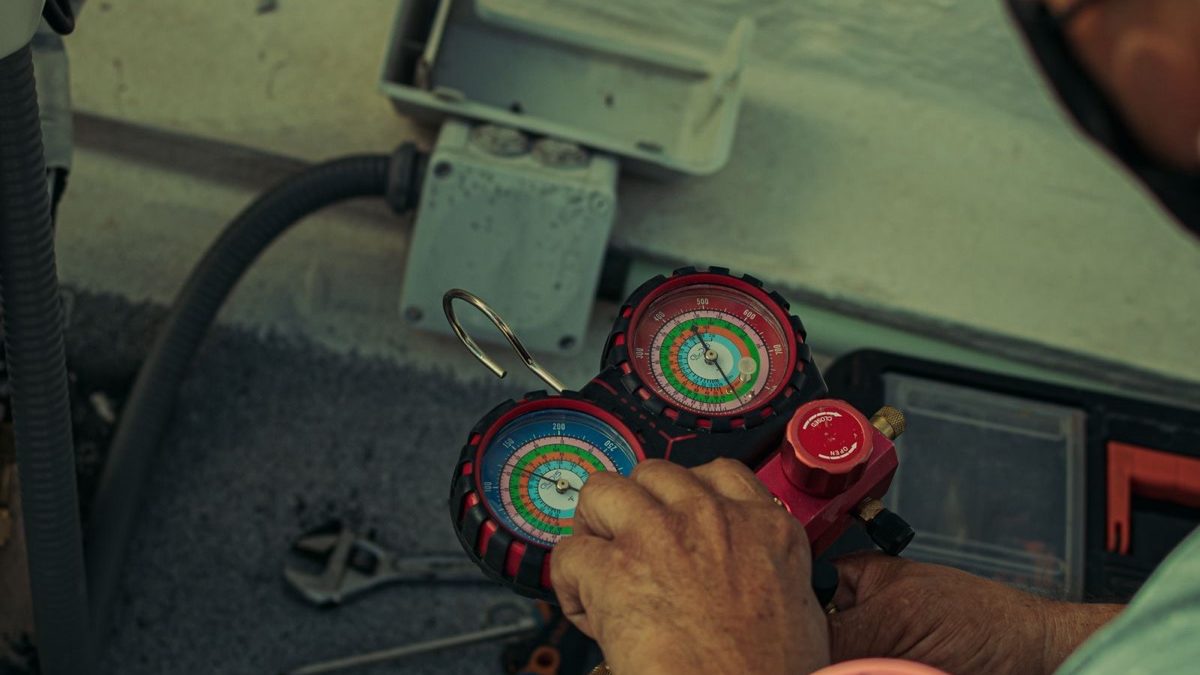
There is no pre charged quick-connect option - you need a vacuum pump, manifold gauges and nitrogen
-
For best performance, Pioneer systems usually need professional installation, and the manual language strongly implies that installs by non-trained people risk a warranty refusal
-
Most Pioneer models have a cold-climate heating floor of about −4 °F, which falls behind the top cold-weather lines from Senville
What Is Senville?
Senville is a Canadian-based budget mini split brand that has been sold widely in the U.S. through online stores since the 2010s. Like Pioneer, its units are made by large OEMs - both brands use manufacturing from major factories like Midea - and both offer ductless mini-split systems for heating and cooling aimed right at you if you want to skip the premium-brand price increase.
Senville's product range centers on the Aura series for cold-climate performance, the LETO series for standard cooling and heating, and additional SENL models that cover 9,000 to 36,000 BTU. Senville mini splits have SEER ratings from 18 to over 25, with Aura units offering SEER ratings of 20 to 22 on typical capacities. The company draws in DIY-oriented buyers with clear pricing, online availability and a reputation for strong customer support and warranty backing. With a 4.6-star rating on Trustpilot, Senville has 83% of its customers giving it five stars.
-
Senville's pricing starts around $800 for a single-room model - that is often the lowest equipment cost in this segment
-
With a rating down to −22 °F in heat mode, the Aura series is liked for how it does in extreme cold environments
-
With Wi-Fi and Alexa compatibility, Senville units often come with smart features
-
Among budget mini split brands, Senville offers some of the highest average efficiency ratings
-
Senville's units are designed for contractor installation with specific equipment needs - a DIY install officially voids the warranty
-
Build quality is seen as trailing behind premium Japanese manufacturers
-
Unless you move up to the Aura, the LETO series has a higher heating floor (~5 °F), which limits cold-climate use
-
Fewer specialized indoor unit types (no ceiling cassettes in most product ranges)
Pioneer vs Senville Specs
Below is a comparison of typical single-zone 12,000–18,000 BTU wall-mounted systems from each brand as of 2026. These are representative specs, not every model - always check current spec sheets before you buy.
| Factor | Pioneer | Senville |
|---|---|---|
| Best for | Homeowners hiring a tech or owning pro tools | Budget-focused DIYers wanting lowest total cost |
| Typical equipment price (12K–18K BTU) | \~$850–$1,100 | \~$800–$1,100 |
| Common SEER range | 17–23 SEER | 18–25+ SEER (legacy) |
| Lowest heating temp (cold-climate series) | \~−4 °F (standard Diamante) | \~−22 °F (Aura series) |
| Line set approach | Standard flare, dehydrated - vacuum required | Standard flare - vacuum required |
| Warranty (compressor / parts) | 5 yr / 5 yr (registered); 1 yr / 1 yr (unregistered) | 10 yr compressor / 5 yr parts |
| DIY friendliness | Low–moderate | Moderate |
| Smart features | Select models, Wi-Fi optional | Wi-Fi and Alexa on many models |
The headline takeaway: Senville generally wins on out-of-the-box value - lower price floor, higher published efficiency, and better cold-climate specs. Pioneer pushes more "pro-grade" installation practices and offers broader indoor unit types, but at similar or slightly higher total install complexity.
Factor 1 DIY Friendliness and Installation Difficulty
Pioneer's Approach
Pioneer does not offer pre charged line sets and explicitly opposes them. It ships dehydrated flare-type line sets and offers the Kwik-E-Vac flushing kit (IKT-KEV-10-516, about $34.75) as a single-use line-set flushing accessory - but this is not a vacuum substitute. The Diamante Pro manual never mentions the Kwik-E-Vac as replacing the full evacuation procedure.
And that evacuation procedure is demanding. The Pioneer WYT-20 (Diamante Pro) manual needs a triple evacuation with a vacuum pump and manifold gauge: pull to 8,000 microns, break with nitrogen, pull to 5,000 microns, break again, pull to 500 microns, then hold without movement for a minimum of 4 hours, repeating until it holds. That's a process you probably don't have the tools or experience to complete correctly.
From the Pioneer manual, indoor-unit placement adds another layer of precision: the bottom of the wall unit is at least 6 ft above the floor, there is 4–6 inches (ideally 8) clear above it for return air, there is a 2.5 to 3.125 inch (63.5–79 mm) core-drilled wall hole at a slight downward angle with the inside bottom ¼ inch higher than the outside, and there is a drain slope of at least 1/100. The Pioneer manual states "Installation must be completed by trained personnel following applicable codes" and that a certified HVAC technician must remove and recycle the product at end of life.
Senville's Approach
Senville also uses standard flare connections and needs evacuation for its systems - it does not sell quick-connect pre charged kits either. But Senville's documentation and marketing appeal more openly to skilled DIYers. The company acknowledges that homeowners may do structural and mechanical tasks (mounting, wall holes, running wire), with the refrigerant-side work - pressure testing, evacuation, opening service valves - handled by a licensed HVAC technician.
Winner: Senville - its documentation puts less friction in the way of an informed DIY install, and its warranty language is seen as more tolerant of homeowner involvement in the non-refrigerant steps. Pioneer's triple-evac requirement and its clear "trained personnel" rule make it feel more pro-only for many homeowners.
Factor 2 Price and Overall Value
Equipment Cost
What's in the box is similar: Pioneer's Diamante Pro ships with a 16 ft copper line set, 16 ft electrical wire, 10 ft drain hose, wall passage sleeve, remote and mounting bracket. Senville's LETO and Aura units similarly include line set, wiring, brackets and remote. Neither includes a vacuum pump, manifold gauges or micron gauge - the tools you actually need to finish the job.
Real-World Install Costs
For Pioneer, factor in renting or buying a vacuum pump ($150–$300), manifold gauge set ($50–$150), nitrogen ($30–$60). The time to learn and execute that triple evacuation - or pay a local tech $300–$800 for startup. Senville presents a similar cost structure: many owners end up hiring a tech for evacuation and electrical, so "DIY" often means "self-mount the hardware, then pay for the delicate steps." That still saves money versus a full professional installation, but it's not zero.
Also, both brands are rated to last about 10 to 12 years with proper maintenance, compared with 15–20 years for premium Japanese systems. That shorter expected lifespan is part of the trade-off for the lower buy price and should factor into your cost-per-year calculation.
Factor 3 Efficiency Cold-Climate Heating and Performance
SEER2, HSPF2 and minimum outdoor temperature ratings matter because they drive long-term energy bills and determine whether a unit can serve as a primary heat source in real winters. A SEER rating of 20 is considered excellent for mini splits - both brands hit that mark, but the details split apart.
Efficiency Ratings
Pioneer mini splits have SEER ratings between 17 and 23. A representative unit like the 12,000 BTU Diamante Pro sits around 20 SEER2, which is efficient for its price point. But Pioneer models with SEER ratings over 24 are hard to find, limiting options for homeowners after maximum efficiency.
Senville offers SEER ratings between 18 and over 25. The Aura series usually lands at 20–22 SEER on 9K–12K capacities, with some smaller units putting out legacy SEER values as high as 25. From Senville's catalog data, heating HSPF4 values range from about 11.2 on smaller units down to 8.5 on larger capacities - strong numbers for budget equipment. Senville offers some of the highest average efficiency ratings among similar mini split brands.
Cold-Climate Capability
Pioneer's common Diamante heat pumps are rated to around −4 °F in heat mode. That's fine for most of the U.S., but it falls well short in northern states or Canadian border regions. Both brands will see significant capacity drop-off as temperatures approach their heating floor - sizing margin and auxiliary heating still matter regardless of brand.
Noise Levels
Both brands are quiet enough for bedrooms. From Senville's Aura catalog, indoor sound pressure levels at low fan speed hit 24–24.5 dB(A) on 9K–12K units, rising to 42–43 dB(A) at high fan speed. Pioneer specs show similar ranges for similar BTU units. Neither is market-leading, but both are fine for residential space conditioning.
Factor 4 Warranty Support and Long-Term Risk
For budget mini split brands, warranty conditions and support responsiveness may matter more than the absolute years printed on the box. Mini splits need professional installation for warranty coverage from both companies - the difference is how strictly each enforces that requirement.
Pioneer's Warranty
Pioneer offers a Basic Limited Warranty of just 1 year on parts and compressor without registration. Register within 90 days and that extends to a Standard Limited Warranty of 5 years on both parts and compressor. Some models go further - the Quantum Ultra series is offering up to 10 years on the compressor and 7 years on other parts, but only if installed by a registered technician within 90 days.
The catch: Pioneer's manual language strongly implies that non-trained installation could give the company a reason to deny warranty claims. All refrigerant line connections, vacuuming and charging must be done by "trained persons with proper tools." Unregistered units lose the full warranty term, dropping to just 1 year - a big penalty for forgetting paperwork. Pioneer covers parts and compressor under warranty, but labor, installation and diagnosis costs are usually excluded and paid by the owner.
Senville's Warranty
Senville's standard warranty is usually 10 years on compressors and parts - longer on paper than Pioneer's registered coverage. Senville includes free replacement parts under warranty and free compressor replacement with shipping included for covered defects. However, labor warranty is never covered by either brand - you pay for the tech's time.
Critically, Senville's warranty documentation states that DIY installation voids the warranty. They need pressure testing, evacuation, opening service valves and adding refrigerant all to be done by a licensed HVAC technician for warranty validity. That's actually more absolute than Pioneer's "trained persons" language, even though Senville is generally seen as more DIY-tolerant.
Neither Pioneer nor Senville matches the 10–12-year comprehensive warranties from major brands like Mitsubishi or Daikin that need dealer installs - and that's part of the trade-off for the lower price and DIY-adjacent appeal. Pioneer mini splits have high consumer ratings, and Senville maintains a 4.6-star rating on Trustpilot with 83% five-star reviews, which suggests customers of both brands are generally satisfied despite warranty limitations.
Winner: Tie (with caveats) - Senville offers longer headline warranty numbers (10 years vs 5 years registered), but is more explicit that DIY voids coverage. Pioneer's registered warranty is shorter but uses softer "trained persons" language rather than flatly requiring a licensed tech. In both cases, you should assume a self-install adds long-term risk. Check current warranty terms on each brand's site before buying.
Factor 5 Product Range Features and Future-Proofing
Pioneer's Lineup
Pioneer is strong in single-zone wall mounts from 9,000 to 36,000 BTU, plus multi-zone condensers supporting several indoor heads. Pioneer has a wider choice of specialized mini-split forms, such as ceiling cassettes, floor units and ducted units - useful if ceiling height or room layout rules out a wall mount. Most models are conventional flare-connection ductless systems. Is smart home support available? It is on pick models but isn't standard across the lineup. Pioneer and Senville use similar compressor and coil part engineering, so internal hardware is similar.
Senville's Lineup
Senville's key series - Aura, LETO and others - span similar BTU ranges with both single-zone and multi-zone options. The Aura series is standing out for ultra-cold heating, while the LETO series is serving standard cooling and heating needs. Senville units often come with smart features like Wi-Fi and Alexa compatibility across more of the lineup than Pioneer, giving you easier control without add-on accessories. However, Senville offers fewer indoor unit form factors - mostly wall mounts, with limited ceiling cassette or floor unit availability.
Future-Proofing
Both brands currently ship most models with R-410A refrigerant. The broader market is shifting toward lower-GWP refrigerants like R-32 and R-454B, and both manufacturers will need to follow. Neither brand has a clear modular expansion path similar to higher-end multi-zone systems from major brands. Senville mini splits perform well for 3–7 years when installed correctly, and both brands are rated to last about 10 to 12 years with proper maintenance - plan your replacement timeline accordingly.
Pioneer vs Senville: Which Should You Choose?
Choose Pioneer if:
-
You plan to hire an HVAC technician anyway for evacuation and commissioning, or you already own and know how to use a vacuum pump, manifold gauges and nitrogen
-
You want to follow best practice installation (triple evacuation, tight core drilling, careful drain slope) and you value detailed manuals that tell you exactly how to do it
-
You're in a moderate to cool climate where Pioneer's low-ambient specs are sufficient and you mainly need reliable heating down to about −4 °F
-
You need a ceiling cassette, floor unit or other specialized indoor unit form factor
Choose Senville if:
-
You're cost-focused and want the lowest combined equipment and install cost for a single-zone 9,000–24,000 BTU system
-
You're a confident DIYer willing to handle mounting, line routing and electrical prep, then pay a pro just for vacuuming and final checks
-
You live where winters are cold and you want strong efficiency plus the Aura series cold-climate option that is rated down to −22 °F
-
Smart control features (Wi-Fi, Alexa) out of the box matter to you
FAQ
Frequently Asked Questions
Specifications, pricing, and warranty terms in this article are manufacturer-published as of October 2026 and are subject to change — verify current details and your model's installation manual before purchase. Brand names are trademarks of their respective owners.
Keep Reading
Related Guides
Mini Split vs Central Air: Which Is Better for Your Home?
Mini split vs central air: compare energy costs, installation, zoning and noise to find which system fits your home and budget. See when ducts help - or hurt.
See the comparison →Best Mini Split for Garage 2026: Top DIY-Friendly Systems Ranked
The best mini split for garage 2026 ranked by real DIY installs, heating in sub-zero temps, and actual energy bills. See which systems owners swear by.
Read the article →Pioneer Precharged Line Set: Is a Vacuum Pump Required?
Pioneer's official stance on pre-charged line sets, what the Kwik-E-Vac flush kit really does, and the no-vacuum DIY alternatives.
Read the guide →Best 120V / 115V DIY Mini Split with a Pre-Charged Line Set (2026)
115V DIY mini splits with pre-charged line sets — SEER2, line sets, plug-in power, price, warranty, and where 115V stops.
See the comparison →