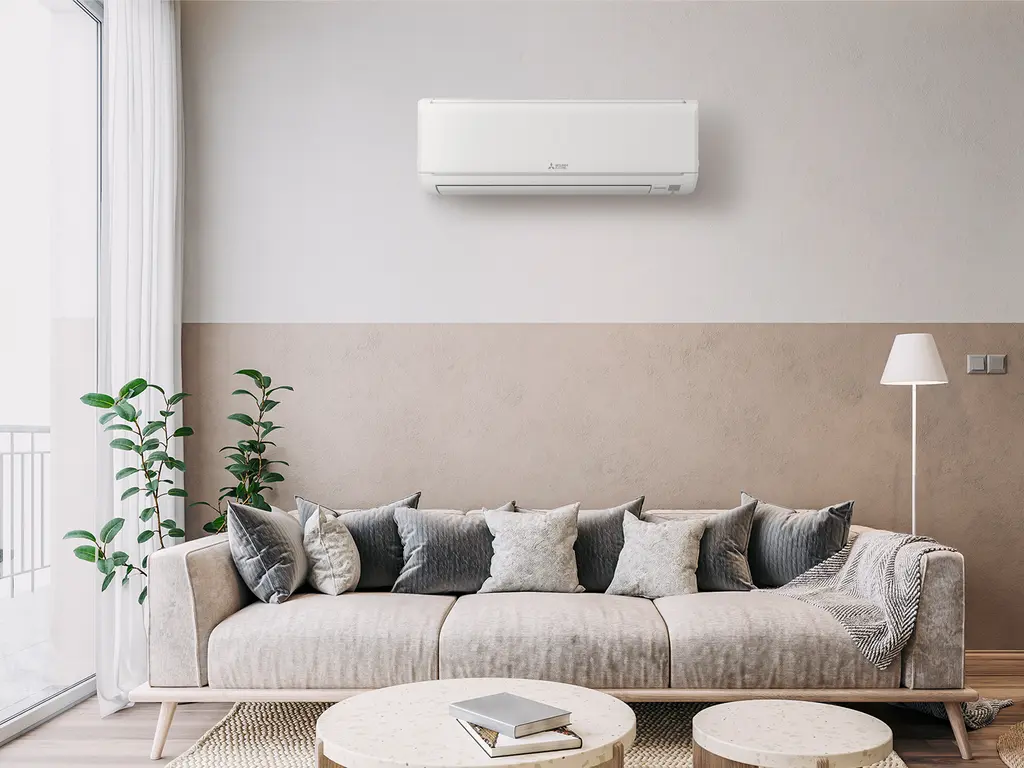
How Multi-Zone Systems Work (One Condenser, 2–5 Heads)

A multi-zone mini split runs several indoor units — the "heads" — off a single outdoor condenser. Each head is its own zone with its own thermostat and remote, so the bedroom can sit at 68°F while the living room holds 72°F, all from one piece of equipment outside. Most residential systems support two to five heads; some premium condensers stretch to eight.

Wall-mounted heads are the most common, but you can mix in ceiling cassettes or slim concealed-duct units on the same system if a brand offers them. The trade-off versus single-zone is at the condenser: it has a total capacity that the connected heads share, and on larger systems the outdoor unit is often sized with some diversity in mind rather than the simple sum of every head running flat-out at once. That's exactly why sizing a multi-zone system deserves a real load calculation, which we get to below.

Best Pro-Install Multi-Zone: Mitsubishi and Daikin

If a licensed contractor is doing the work and you want the strongest multi-zone equipment on the market, this is a two-horse race. Mitsubishi's MXZ multi-zone condensers run up to eight indoor heads, pair with Hyper-Heat performance for cold climates, and sit on the deepest service network in the category — the safe pick for a whole-home system you'll keep 15 to 20 years. Daikin's multi-zone lineup is the close competitor, with strong efficiency and a broad range of indoor styles.

Both are excellent, and both are professional installs: the line sets ship empty and require a vacuum, gauges, and EPA 608-certified refrigerant work at every head. Budget for equipment plus a multi-head labor bill — a four- or five-zone Mitsubishi or Daikin system is a five-figure installed project. You're paying for performance and longevity, and for those buyers it's worth it.

Best DIY Multi-Zone

Here's what most whole-home DIY guides gloss over: multi-zone used to mean "hire a pro," because charging refrigerant across multiple heads is a lot of vacuum work. Pre-charged DIY changed that. Zone Air's two-zone and 3 Zone bundles ship with every lineset pre-charged from the factory, so even a three-head install stays vacuum-pump-free — you route each line, connect it, and release the charge, with no gauges or EPA 608 certification. The systems run on 230V at up to 24 SEER2 on R-454B, cover roughly 900 to 1,800 square feet depending on configuration, and give each room an independent thermostat and WiFi control. Only a couple of brands actually ship truly quick-connect, pre-charged line sets you can hook up without a vacuum pump — MRCOOL and Zone Air — while the rest of the field, even "pre-charged" flare units, still needs a vacuum pump and gauges.

MRCOOL also offers DIY multi-zone options and is worth cross-shopping; it's the other widely available pre-charged name. But for a homeowner who wants a genuine multi-room install without a contractor and without a bargain-brand gamble, Zone Air is the DIY multi-zone pick. Compare the full DIY field in our best DIY mini split brands rankings.

Multi-Zone vs Multiple Single-Zone Units

Before you commit to one big condenser, weigh the alternative: several separate single-zone systems. It's not obvious which wins.

A single multi-zone condenser saves outdoor space, cuts the number of wall penetrations, and looks cleaner — one unit on the pad instead of three. The downside is that it's a single point of failure: if that condenser goes down, every room loses heating and cooling at once, and the up-front cost per zone can run higher than separate units.

Multiple single-zone systems flip that. They're often cheaper per zone, they give you redundancy (a failure only takes out one room), and they're easier to add to over time — install one now, another next year. The cost is more outdoor units and more line-set runs. For two or three rooms clustered together, multi-zone usually wins on tidiness; for scattered rooms, phased budgets, or maximum reliability, separate single-zone units frequently make more sense.

Sizing a Multi-Zone System

Sizing is where multi-zone projects go wrong. The instinct is to add up the BTUs of every room and buy a condenser that matches — but oversizing a multi-zone system leads to short-cycling, poor humidity control, and comfort complaints. A proper Manual J load calculation for each room, then a condenser matched with the right diversity, is the correct path.

As a rough starting point, plan on roughly 20–30 BTU per square foot depending on climate, insulation, ceiling height, and sun exposure, and size each head to its room rather than flooding a small bedroom with a 12,000 BTU unit. Zone Air's DIY multi-zone bundles are sold in fixed head combinations (for example 9K+9K or 12K+12K+12K), which makes matching heads to rooms straightforward — but still run the numbers per room first. A quick BTU calculator gets you in the ballbark; a load calc confirms it.

Multi-Zone Spec Comparison

Brand Zones Install SEER2 Refrigerant Best for
Mitsubishi (MXZ) Up to 8 Pro (vacuum, EPA 608) Up to ~33.1 R-454B / R-32 Whole-home, cold climate, longevity
Daikin Up to 8 Pro (vacuum, EPA 608) High R-454B / R-32 Pro-install, wide indoor styles
Zone Air 2–3 DIY (pre-charged, no vacuum) Up to 24 Pre-charged R-454B DIY whole-home, save on labor
MRCOOL 2–5 DIY (pre-charged, no vacuum) Up to ~23.5 Pre-charged R-454B DIY, Home Depot availability

Specs are manufacturer-published and vary by model and configuration; verify current listings as of July 2026 before buying. Multi-zone systems run on 230V.

Multi-Zone Mini Splits: FAQs

For a professionally installed system, Mitsubishi's multi-zone MXZ lineup is the benchmark — up to eight indoor heads on one condenser, Hyper-Heat cold-climate performance, and the deepest service network — with Daikin a close alternative. For a homeowner who wants to install it themselves, Zone Air is the standout: its two-zone and 3 Zone systems ship with every lineset pre-charged, so a multi-room install skips the vacuum pump. The "best" comes down to whether a licensed tech or you is doing the work.
You can if you buy a pre-charged DIY multi-zone system. Traditional multi-zone units from Mitsubishi and Daikin ship with empty line sets that require a vacuum pump, gauges, and EPA 608 certification per head — a job for a licensed tech. Pre-charged DIY multi-zone systems, like Zone Air's two-zone and 3 Zone bundles, come with each lineset charged at the factory, so you route and connect each head without pulling a vacuum. Multi-zone systems run on 230V, so plan for a dedicated circuit.
Most residential multi-zone condensers serve two to five indoor heads, and some premium Mitsubishi and Daikin units go up to eight. Each head is its own zone with an independent thermostat, so you can set different temperatures room to room. The limit isn't just head count — the condenser has a total capacity, and the connected indoor heads should be sized to it, which is why professional load calculations matter on bigger systems.
Not always. Multiple single-zone units often cost less per zone and give you redundancy — if one condenser fails, only that room goes down. A single multi-zone condenser saves outdoor space and wall penetrations and looks cleaner, but it can cost more up front and creates a single point of failure. For two or three rooms close together, multi-zone usually wins on tidiness; for scattered rooms or tight budgets, separate single-zone units are frequently the better value.
The genuinely no-vacuum DIY systems are the ones with pre-charged, quick-connect line sets: Zone Air and MRCOOL are the clearest examples. Their line sets seal the refrigerant in with self-connecting couplings, so there's no vacuum pump, no gauges, and no EPA 608 certification. Pioneer, Senville, Della, and premium brands like Mitsubishi and Daikin use flare connections that require evacuation, which is why they're better suited to owners with tools or to professional installation.

Who Wrote This Guide

John Osborne

Editor-in-Chief, Best DIY Mini Split Brands

Last reviewed July 21, 2026

John Osborne is the Editor-in-Chief of Best DIY Mini Split Brands and reviews every guide we publish. Our team are homeowners who've installed pre-charged ductless systems in our own additions, garages, and bonus rooms — not contractors selling a service. Our guides draw on hands-on install experience, official manufacturer documentation, and product testing data to give you straight answers.

More Mini Split Guides

Ready to Pick Your System?

Compare the top DIY mini split brands side-by-side, or start with the quick-start guides to plan your install.