Comparison · 2026
Mini Split vs Central Air: Which Is Better for Your Home?
Opinion: The rankings in this article are the opinion of the author.
Choosing between a mini split vs central air can really come down to whether your house already has ductwork that is modern and well-sealed. If it does, central air might be the cheaper way to get whole-house cooling. If it doesn't, or if those ducts run through a hot attic and leak everywhere, a ductless mini split can cool and heat your home more efficiently, more quietly and with better control from room to room.
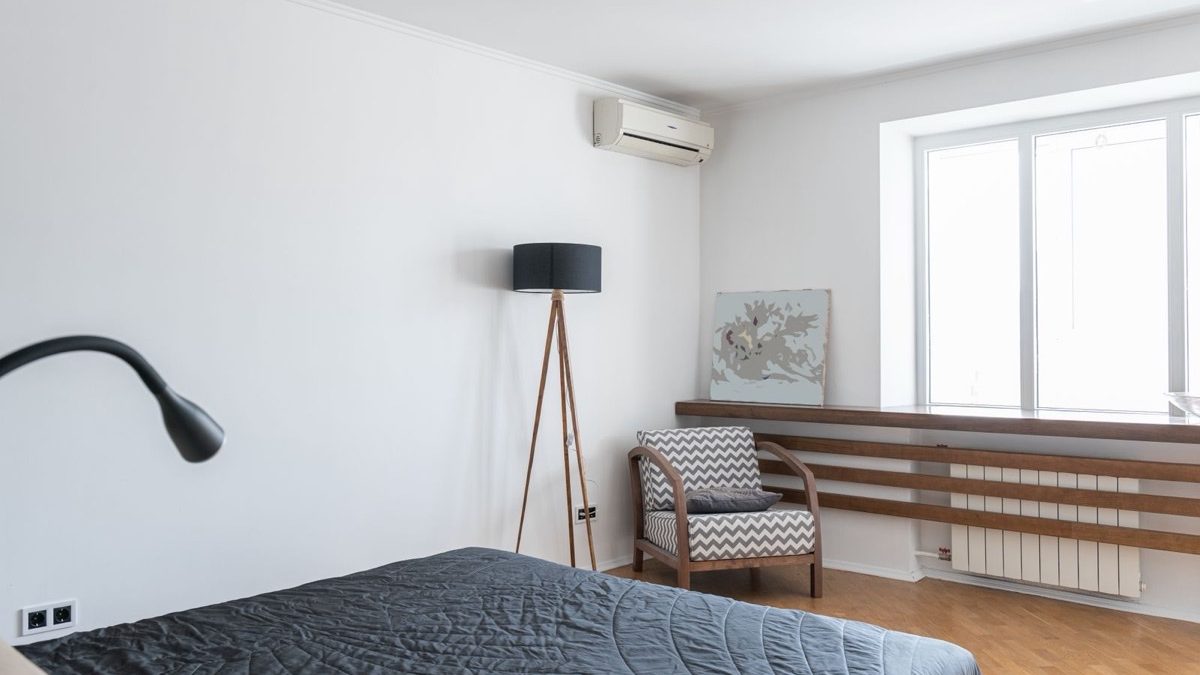
The single biggest thing you might want to look at is the ductwork. Ductwork can cause energy losses of 20% to 30% in central air systems, and in older homes the leakage can get even worse. If you'd have to add ducts to your house, the installation gets a lot more complex and the cost can double. A ductless system can avoid all of that.
What Is a Ductless Mini Split System?
When it comes to the main pros, mini splits can offer:
- High efficiency ratings. The typical SEER2 for ductless mini splits is around 21–22, with HSPF2 numbers near 10.0. Units that are under one ton can reach about 23.5 SEER2.
For DIY-capable homeowners, the key distinction is between pre-charged, quick-connect line-set systems (no vacuum pump, no flaring, no refrigerant handling) and traditional flare or field-charged systems that need EPA Section 608 certification and professional tools. We always tell readers to double-check the installation manual and warranty language for the specific model before you try any DIY install-some manufacturers will reduce or void coverage on units that you install yourself.
What Is a Central Air System?
The key pros of a central system are:
Modern central AC efficiency has to meet the DOE minimum levels under 10 CFR 430.32(c) for equipment that was built after January 1, 2023. Split air conditioners are needed to have at least 13.4 SEER2 in the North and 14.3 SEER2 (under 45,000 Btu/h) or 13.8 SEER2 (45,000 and up) in the Southeast and Southwest. Split-system heat pumps must hit at least 14.3 SEER2 and 7.5 HSPF2 in every region. Higher-end ducted systems can reach about 16–20 SEER2, but that is still well below what ductless units average.
Central air is rarely something you can DIY. The design of the ducts (Manual D), the load calculations (Manual J), the handling of refrigerant under EPA Section 608, and the major electrical work all make it a job for a pro for almost every homeowner.
Mini Split vs Central Air Overview
| Factor | Mini Split | Central Air |
|---|---|---|
| Best for | Homes without ducts, additions, older homes, zoned comfort | Homes with existing, well-sealed ductwork and a compatible furnace |
| Typical installed cost (2,000 sq ft home) | $10,000–$24,000 (multi-zone, whole house) | $10,000–$18,000 (condenser + coil swap with good existing ducts) |
| Typical SEER2 / HSPF2 | \~21–22 SEER2 / \~10.0 HSPF2 | \~14.3–16.0 SEER2 / \~9.0 HSPF2 |
| Zoning & room control | True multi-zone; each indoor unit has its own setpoint | Single thermostat (or expensive motorized-damper zoning) |
| DIY potential | High for pre-charged, quick-connect systems | Very low-nearly always requires a licensed contractor |
| Installation disruption | Small 3-inch wall penetrations, wall/ceiling-mounted heads | Duct runs through attics/crawlspaces, register cuts, patching |
| Indoor noise | 19–26 dB (whisper-quiet) | 40–55 dB at supply registers |
| Aesthetics | Visible wall or ceiling cassettes in each room | Hidden-only supply registers visible |
Headline takeaway: Mini splits win on energy efficiency, zoning, noise, and DIY potential. Central air wins where solid ducts already exist and homeowners want hidden equipment with one-thermostat control.
Energy Efficiency & Operating Cost
Ductless mini splits have a clear edge. The typical SEER2 for ductless units is about 21–22, compared to about 16.0 SEER2 for central ducted systems. Energy efficiency can vary a lot between mini-split and central AC systems, but that gap is the same across data sets. On the heating side, ductless HSPF2 numbers sit around 10.0 versus ~9.0 for ducted heat pumps-and compared to electric resistance heat or an aging furnace at shoulder-season loads, the difference in energy savings is even larger.
Then add duct losses. Ductwork can lead to energy losses of 20% to 30% in central air systems, according to DOE research. In older homes with ducts that run through attics or crawlspaces that are not conditioned, leakage can reach 30–50% of system airflow. Mini-splits can cut out up to 30% energy loss from ducts simply by not using them. More operating waste can happen in central AC systems when they cool rooms that no one is using-something zoned mini splits avoid completely. Mini-splits can reduce energy use by up to 60% in the right scenarios.
A quick cost example: in a 2,000 sq ft house in a warm climate (Zone 3–4) with about 1,000–1,500 cooling hours per year and electricity at $0.15/kWh, a ductless mini split at SEER2 ~22 might run $700–$1,000 per cooling season. A central system at SEER2 ~16 with 25% duct losses could cost $900–$1,200 for the same delivered cooling. That gap can add up to several thousand dollars over 15 years.
Winner: Mini Splits - ductless systems have higher SEER2 and HSPF2 ratings, no duct losses and inverter-driven compressors that adjust to match the load, and all of that gives them a real advantage on operating cost. Central air can keep pace only when ducts are tight, well-insulated and usage patterns are simple.
Comfort, Zoning and Noise
Inverter-driven mini splits can adjust the speed of the compressor in a continuous way to match the cooling or heating load. Instead of turning on at full blast and shutting off when the thermostat is happy, they can run longer but softer cycles. That can mean tighter temperature control, fewer hot and cold spots, and better humidity management on humid summer days. Central systems, especially single-stage models, cycle on and off harder and create temperature swings of 2–4°F, with rooms farthest from the air handler getting the short end.
On noise, mini-splits run as quietly as 19–26 dB indoors, which is about like a quiet library or leaves making noise. Central system supply registers usually put out 40–55 dB, and the air handler startup adds a noticeable burst of sound. Outdoor condenser noise also helps mini splits, at about 48–60 dB versus 55–75 dB for many central condensers.
Upfront Cost, Installation & Home Disruption
Cost is usually the first thing people might worry about. Here are realistic installed price ranges for a typical U.S. house that is 2,000 sq ft in 2024–2026:
-
Central air replacement (condenser + coil + air handler with existing ductwork that is in good shape): $10,000–$18,000.
-
There is also central air with significant new ductwork (new ducts, insulation or major repairs): $15,000–$28,000 or more.
-
Single-zone mini split (one room, garage or basement addition): $2,500–$6,000 installed.
-
Multi-zone whole-home ductless (4–6 zones that cover most rooms): $10,000–$24,000 installed.
Physical disruption differs sharply:
Both systems require mechanical and electrical permits in most U.S. jurisdictions. True DIY is generally not feasible for central systems. Certain pre-charged mini split systems are marketed directly to homeowners, but electrical code still applies: you need proper breakers, correct wire gauge, a code-compliant disconnect and in many areas, a permit and inspection.
Installation Complexity, Electrical & DIY Potential
Mini split installation steps (high level): mount the indoor unit on the wall or ceiling, set the outdoor condenser on a pad or bracket, drill through the wall (about 3 inches), run the line set and communication cable through the hole, connect refrigerant lines (quick-connect or flare depending on the system), and make electrical connections at the breaker panel and outdoor disconnect.
Here is what the electrical side looks like in current installation manuals:
-
A current mini split manual calls for an HACR-type circuit breaker that is rated at 1.5 times the unit's maximum current and that opens all poles with at least 1/8 inch of contact separation.
-
Use a single-pole breaker for 115V units and a double-pole (not a two-in-one) breaker for 230V units. The manual also calls for a surge protector at the outdoor disconnect.
-
On one common flare-type mini split line, the indoor-to-outdoor communication cable is 16 AWG four-conductor TC-ER cable that carries two power leads, one signal wire and ground, with factory U-lugs. Homeowners must match the gauge and insulation type in their unit's manual exactly.
Which mini split types can you install on your own? Factory pre-charged, quick-connect line set systems with no vacuum pump, no flaring and no refrigerant handling. These are the systems we focus on at Best DIY Mini Split Brands. Flare connections, field-charged systems and complex multi-zone setups with long line sets should go to a licensed pro.
- Refrigerant handling under EPA Section 608.
Who should skip DIY altogether? Anyone who isn't comfortable working inside a live electrical panel, anyone who's unsure about torque specs for lugs, or anyone who won't pull permits and pass inspection. If you're not confident with electrical work, hire a licensed electrician or HVAC contractor no matter which system you're getting.
Winner: Mini Splits (specifically pre-charged DIY systems) - central air is basically pro-only. Pre-charged mini splits give competent homeowners a real path to self-installation, which can save $1,000–$3,000+ in labor for each zone.
Reliability, Maintenance & Lifespan
Both ductless mini splits and central systems last about 12–20 years when they are installed the right way. Climate, installation quality and how well you keep up with maintenance are all things that can heavily affect how long they last.
| Task | Mini Split | Central Air |
|---|---|---|
| Filters | Wash reusable filters every 2–4 weeks | Replace or clean return air filters monthly to quarterly |
| Outdoor unit | Keep coil clear with \~2 ft of clearance; remove debris | Same general coil cleaning |
| Condensate drains | Check for clogs at each indoor head | Check at air handler |
| Ductwork | N/A-no ducts | Inspect for leaks, seal gaps, verify insulation integrity |
| Professional service | Annual tune-ups for mini-splits are recommended; periodic coil cleaning | Annual tune-up; blower maintenance; furnace service |
Mini splits have more electronics and control boards in each indoor unit, which can mean more complex board-level repairs. But they avoid the hidden duct issues that plague central systems-disconnected sections, mold growth in dark crawlspaces, dust accumulation reducing airflow and indoor air quality over time.
Warranty details matter. Some manufacturers reduce or void coverage for self-installed systems compared to ones that are installed by a contractor. Pre-charged kits sometimes qualify for warranty if you install them per the manual and register them properly. Flared or field-charged systems often need a licensed installer for full coverage. We always recommend reading the current warranty document, especially the sections on DIY installs, before you buy any system.
Safety, Refrigerants & Code Compliance
Both systems move refrigerant and both must be installed to code. Safety is not optional just because a product is sold as "DIY."
Refrigerant considerations: Many new mini splits and central systems are shifting toward slightly flammable refrigerants like R-454B, which now accounts for about 80–81% of recently certified heat pump models. R-454B is rated A2L (slightly flammable). A current R-454B mini split installation manual tells installers to keep the equipment away from continuously operating open flames and ignition sources such as a running gas appliance or electric heater, and to have anyone servicing the refrigerant side be competent in handling flammable refrigerants. This applies to both mini split and central heat pump installations.
Electrical safety:
-
Properly sized HACR breakers, correct wire gauge and code-compliant disconnects near outdoor units are things you can't skip.
-
Local code may require dedicated circuits, AFCI/GFCI protection in certain locations, and inspections.
-
DIYers must still pull permits where required. Failing inspection can void homeowner's insurance coverage after a fire or refrigerant incident.
Winner: Central Air (slight edge) - because it's almost always professionally installed, there's less risk of installation shortcuts. Mini splits are just as safe when they're installed exactly per manual and code, but DIY becomes a concern when homeowners cut corners on breaker sizing, wire gauge or permit requirements.
When a Mini Split Makes More Sense
A ductless mini split is a good fit if your situation matches one or more of these:
- DIY-capable homeowners. If you're comfortable with electrical work under permit and want to install a pre-charged, quick-connect system yourself, mini splits are the only realistic self-install HVAC option for whole-home cooling.
We consider mini splits our preferred option in these scenarios. Before you buy, check the model specs (SEER2, HSPF2, heating floor temperatures), the limits on line set length, how much ceiling height you need to mount the unit, and the warranty terms for DIY installs.
When Central Air Is Better
Central air is the better pick when:
- You don't want any part in installation. When you hire an HVAC contractor, central air is a full contractor job, with no decisions about head placement, line set path or breaker sizing on your end.
Mini Split vs Central Air: Which to Choose?
Before you buy, remember to:
-
Read the warranty document for DIY vs. pro install rules-coverage terms vary by manufacturer and system type.
-
Talk to local code officials or a licensed electrician about decisions on panel and breaker sizing.
FAQ
Frequently Asked Questions
Specifications, pricing, and warranty terms in this article are manufacturer-published as of October 2026 and are subject to change — verify current details and your model's installation manual before purchase. Brand names are trademarks of their respective owners.
Keep Reading
Related Guides
Best Mini Split for Garage 2026: Top DIY-Friendly Systems Ranked
The best mini split for garage 2026 ranked by real DIY installs, heating in sub-zero temps, and actual energy bills. See which systems owners swear by.
Read the article →Pioneer Precharged Line Set: Is a Vacuum Pump Required?
Pioneer's official stance on pre-charged line sets, what the Kwik-E-Vac flush kit really does, and the no-vacuum DIY alternatives.
Read the guide →Best 120V / 115V DIY Mini Split with a Pre-Charged Line Set (2026)
115V DIY mini splits with pre-charged line sets — SEER2, line sets, plug-in power, price, warranty, and where 115V stops.
See the comparison →Best DIY Mini Split for a Workshop (12,000 BTU, 2026)
12,000 BTU DIY options for a 300–550 sq ft shop or garage — line set lengths, 115V power, SEER2, cold-climate heat, dust and filters, price, and DIY install.
See the comparison →