Owner Reports · 2026
MRCOOL popularized the DIY mini split — but no brand is flawless. Here are the problems owners report most in 2026, drawn from aggregated reviews and forums, plus what MRCOOL gets right.
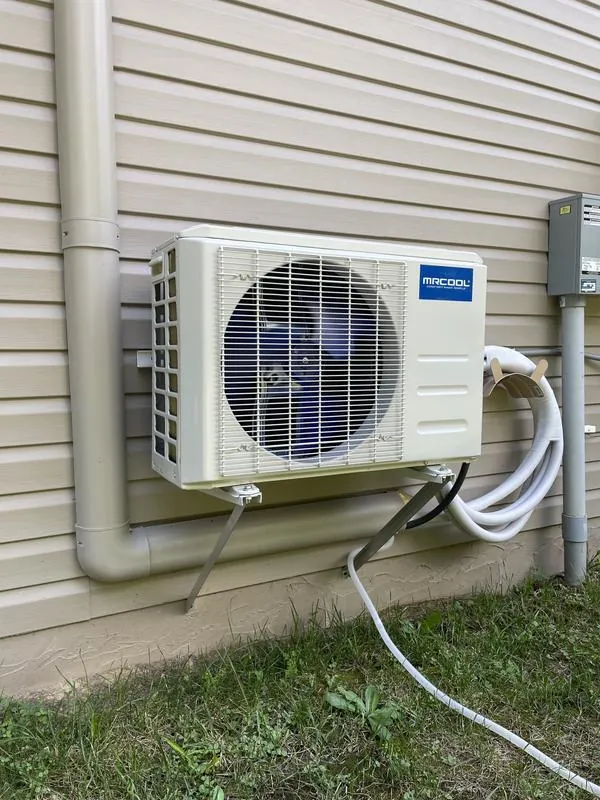
The MRCOOL problems owners report most in 2026 are refrigerant/connection leaks (often at the DIY quick-connect fittings, shown by an "EC" code), electronic control-board failures, and sensor faults — compounded by a warranty that excludes labor and diagnostics, so repairs can run $800+ even while "covered." Most owners still report solid performance when the unit is installed and maintained correctly, and MRCOOL DIY systems typically last 12–15 years.
The Short List
MRCOOL DIY units are among the most-installed homeowner mini splits in the country, so they generate a lot of feedback — good and bad. Sorting the aggregated 2026 reviews, the complaints cluster into a short, repeatable list rather than a scattershot of one-off failures. That's actually useful: it tells you what to watch for and where careful installation pays off.
Two themes run through nearly all of it. First, a large share of hardware problems trace back to the DIY install itself — the quick-connect fittings that make MRCOOL easy to install are also where leaks start if they aren't seated and torqued correctly. Second, the warranty structure turns an otherwise minor repair into an expensive one, because it doesn't cover the labor to fix it.
Aggregated Feedback
Pulled from owner reviews across Home Depot, the BBB, Trustpilot, and HVAC forums (roughly late 2025 through mid-2026):
Worth keeping in perspective: the same aggregated reviews are largely positive on value and performance. The pattern is less "MRCOOL is unreliable" and more "MRCOOL rewards a careful install and punishes a rushed one." Verify current warranty terms and model specs as of July 2026 before buying — MRCOOL updates both across generations.
Issue #1
The most-reported MRCOOL problem is a refrigerant leak, usually announced by an "EC" fault code and often located at the quick-connect couplings where the pre-charged line set meets the units. This is largely an installation story: the coupling has to be threaded straight and torqued to spec, and a cross-threaded or under-tightened fitting will weep refrigerant over weeks or months until the system underperforms or trips the code.
The reason this stings financially is the warranty. Owners report a leak diagnosis running around $800 with replacement parts near $400, and because MRCOOL's warranty excludes labor and diagnostics, those costs land on the homeowner even when the part itself is technically covered. The takeaway from the threads is consistent: take your time on the connections, don't reuse or over-flex the line sets, and follow the torque guidance in our pre-charged line-set guide to avoid the most expensive failure mode before it starts.
Issue #2
After leaks, the next cluster is electronic: control-board failures and sensor faults, with a handful of owners reporting a board giving out inside the first year. One representative account described a control-board failure at eight months on an 18k BTU unit — MRCOOL covered the parts and shipping, but the replacement took about three weeks, and in the meantime the system was down. Smart-control and app connectivity gripes show up too, though they're more nuisance than failure.
The through-line, again, is the warranty. MRCOOL deserves credit for honoring a homeowner install at all — most brands void coverage the instant you self-install. But the fine print excludes labor, diagnostics, shipping, and handling, so a "covered" board still costs you a service call and downtime. If you buy MRCOOL, register the unit, keep your receipts, and budget for the possibility that you'll pay a tech even under warranty.
Longevity
With a clean install and routine maintenance, MRCOOL DIY systems typically last about 12 to 15 years, and owners who stay on top of filter and coil cleaning report reaching closer to 20. The 5th Gen improved on earlier reliability — aggregated reports put roughly 85% of units running trouble-free past the first year — but MRCOOL still doesn't match the documented 15-to-20-year field record of premium brands like Mitsubishi.
That's a fair trade for many buyers: a garage, workshop, or addition doesn't need multi-decade equipment, and the install savings are real. Just size the unit correctly, clean the filters on schedule, and have it serviced every couple of years — the difference between the low and high end of that lifespan range is almost entirely maintenance and install quality.
The Company
MRCOOL is an American company headquartered in Hickory, Kentucky. It designs its systems and runs quality control, testing, and distribution in-house, while much of the physical manufacturing happens in Asia — a standard arrangement across the ductless category, including for several premium names. MRCOOL's calling card is that it popularized the truly DIY, pre-charged, quick-connect mini split and put it on the shelf at retailers like Home Depot.
Knowing the ownership matters for one practical reason: support and parts run through MRCOOL's U.S. operation, which is a point in its favor versus anonymous marketplace private labels that vanish when you need a board. It's a real company with a real warranty — the criticisms above are about the terms of that warranty, not whether one exists.
The Other Side
A problems roundup shouldn't leave you thinking the brand is a mistake — it isn't, and it's on our shortlists for good reason. MRCOOL genuinely delivers on its core promise: a homeowner can install a complete, code-capable heat pump in an afternoon with no vacuum pump and no EPA 608 certification. That single feature saves most buyers $3,000–$5,000 in labor.
See the full head-to-head in our MRCOOL DIY review and our best DIY mini split brands rankings.
If You Want an Alternative
If the warranty terms or the leak reports give you pause but you still want a true DIY install, there's a like-for-like option to weigh. The pre-charged alternative owners compare most is Zone Air, whose line sets ship charged from the factory and whose 7-year compressor / 5-year parts warranty stays valid on a homeowner install with no registration required. It's tested and assembled in the USA, runs on a standard 115V outlet, and reaches up to 24 SEER2 — the same weekend-install premise with a longer efficiency reach.
It's not the only pre-charged brand, but it's the one most cross-shopped against MRCOOL. Run the comparison for yourself in our DIY brand rankings before you decide. Only a couple of brands actually ship truly quick-connect, pre-charged line sets you can hook up without a vacuum pump — MRCOOL and Zone Air — while the rest of the field, even "pre-charged" flare units, still needs a vacuum pump and gauges.
Common Questions
About the Author
Editor-in-Chief, Best DIY Mini Split Brands
Last reviewed July 21, 2026
John Osborne is the Editor-in-Chief of Best DIY Mini Split Brands and reviews every guide we publish. Our team are homeowners who've installed pre-charged ductless systems in our own additions, garages, and bonus rooms — not contractors selling a service. Our guides draw on hands-on install experience, official manufacturer documentation, and aggregated owner reports to give you straight answers.
Keep Reading
Our full hands-on-informed review of the MRCOOL DIY line — specs, install, and where it fits.
Read the review →Efficiency, install, cost, and warranty compared — and which one is the smarter buy for your project.
Compare them →The pre-charged DIY brands ranked head to head — install difficulty, efficiency, warranty, and support.
See the rankings →How the quick-connect, no-vacuum hookup works — and how to seat the fittings so they don't leak.
Read the guide →Compare the top DIY mini split brands side-by-side, or start with the quick-start guides to plan your install.