The No-Vacuum Shortlist · 2026
"Pre-charged" gets printed on a lot of boxes, but only a few systems actually let you install without a vacuum pump. Here's what the term really means and which pre-charged mini splits are worth buying in 2026.
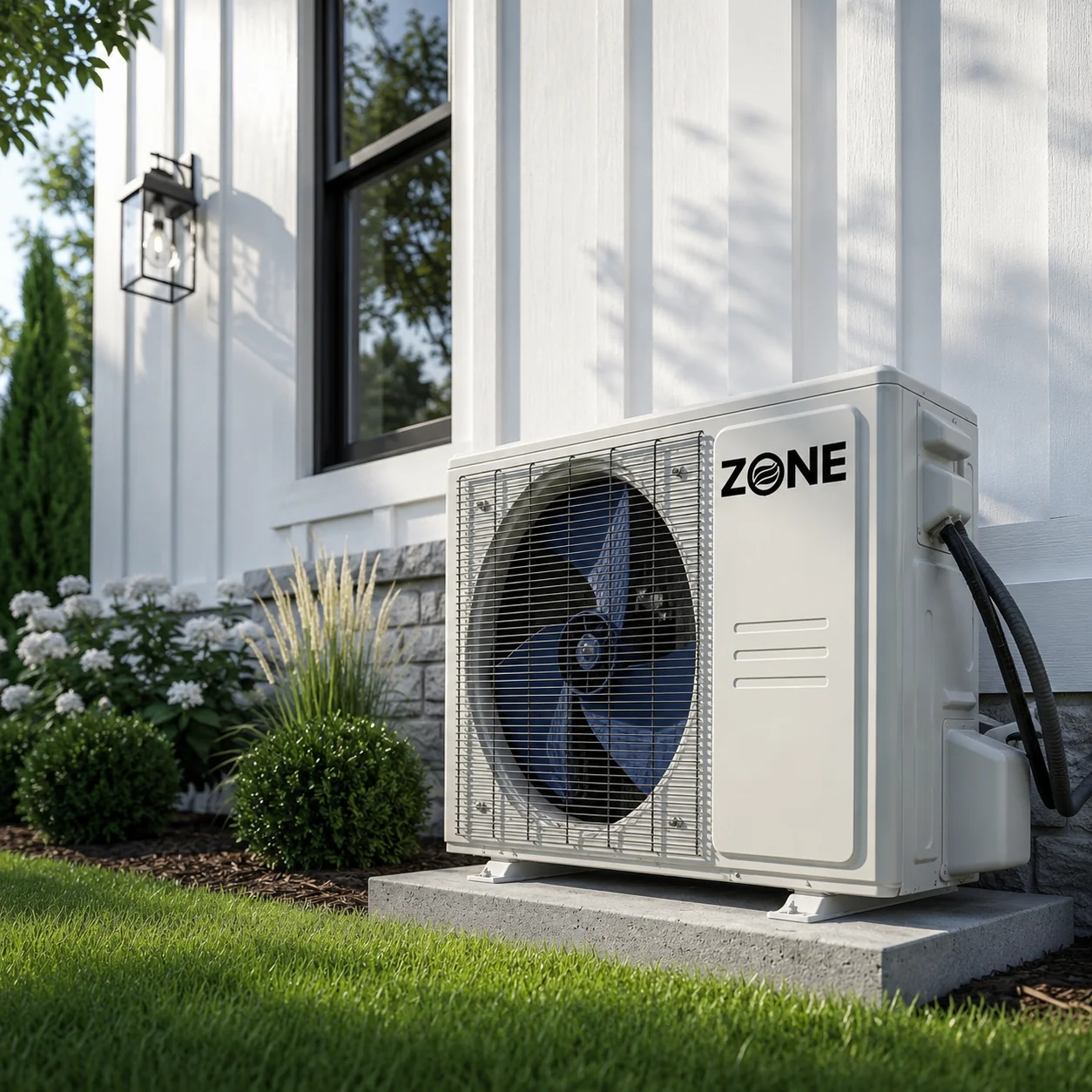
The best pre-charged mini splits for a true no-vacuum install are the quick-connect systems: Zone Air and MRCOOL. Both seal the refrigerant inside the line set, so no vacuum pump, gauges, or EPA 608. Watch the fine print — brands like Pioneer, Della, and Senville have pre-charged condensers but flare line sets, so they still need a vacuum. All current picks run on R-454B refrigerant.
Definitions Matter
"Pre-charged" sounds like a single feature, but it hides two very different products. In the first, the refrigerant is sealed inside the line set itself, with self-connecting quick-connect couplings on each end — you route the line, hand-tighten the fittings, and release the charge. No vacuum, no gauges, no license. In the second, only the outdoor condenser is charged at the factory for a set line length, and the line set is ordinary copper with flare fittings — which means you still have to flare the connections and pull a vacuum before opening the valves.
Both get marketed as "pre-charged," and that's exactly where buyers get burned. The first is a genuine no-tools DIY install; the second is a normal HVAC job with the refrigerant amount pre-measured. When you shop, the word to look for isn't "pre-charged" — it's quick-connect.
The Shortlist
Sorted by what "pre-charged" really buys you:
Here's the membership rule in one line: only a couple of brands actually ship truly quick-connect, pre-charged line sets you can hook up without a vacuum pump — MRCOOL and Zone Air — while the rest of the field, even "pre-charged" flare units, still needs a vacuum pump and gauges. Everything on the market claims easy installation; these two actually deliver a no-vacuum one. Our DELLA pre-charged breakdown shows how the flare-based "pre-charged" units really install.
The Install
On a quick-connect system, the refrigerant is already sealed in the line set. You mount the indoor and outdoor units, route the line set, hand-tighten the self-sealing couplings to spec, and open the valves. There's no evacuation step because there's no air or moisture to remove from a sealed line — that's the entire point, and it's what removes the vacuum pump, the manifold gauges, and the EPA 608 requirement from the job.
On a flare system, the line set ships empty and open. Even if the condenser is pre-charged, you have to cut and flare the copper, connect it, then pull a deep vacuum (typically below 500 microns, held to confirm no leaks) to evacuate air and moisture before you release the charge. Skip it and moisture stays trapped in the loop, forming acids that attack the compressor windings and void the warranty. It's not hard with the right tools and experience — but it's a different job, and it's the line between "any homeowner can do this" and "you need to know what you're doing." Our quick-connect line-set guide walks through the no-vacuum version step by step.
Refrigerant in 2026
If you're buying a pre-charged system in 2026, the refrigerant question is settled: you want R-454B. Under the federal HFC phasedown, new residential systems have moved off the old high-GWP R-410A to lower-GWP refrigerants, and R-454B is the one the mini split industry standardized on. The current pre-charged picks — Zone Air, MRCOOL, and Pioneer's Diamante line — are all R-454B.
Why it matters for a pre-charged buyer specifically: your system's refrigerant availability and parts pipeline over the next 10 to 15 years track the standard it was built on. An R-454B system is the future-proof choice. A deeply discounted R-410A closeout can still be a legitimate value if the price is right and you understand the long-term serviceability trade-off — but for a system you plan to keep, buy into the current standard.
Side by Side
| Brand | Install Tier | SEER2 | Refrigerant | Warranty | Vacuum needed? |
|---|---|---|---|---|---|
| Zone Air | Pre-charged quick-connect | Up to 24 | Pre-charged R-454B | 7-yr comp / 5-yr parts, no registration | No |
| MRCOOL | Pre-charged quick-connect | Up to ~23.5 | Pre-charged R-454B | Compressor coverage, honors DIY | No |
| Pioneer | Pre-charged condenser, flare line set | ~19–23 | R-454B | 5-yr parts/compressor (register in 90 days) | Yes |
| Della / Senville | Pre-charged condenser, flare line set | Varies | R-454B / R-410A (varies) | Varies by model | Yes |
Specs are manufacturer-published and vary by model; verify current listings as of July 2026 before buying.
The Pick
If a genuine no-vacuum install is the goal, buy a quick-connect system — and between the two that qualify, the decision usually comes down to efficiency, warranty, and availability. MRCOOL is the safe, everywhere-available anchor, and it's an easy recommendation if you want to walk into a Home Depot and carry one out.
Zone Air anchors the pre-charged shortlist on the spec sheet: its entry kit lands at $1,899, the lineup tops out at 24 SEER2, and it ships with the refrigerant already sealed in the lines. Add a 115V single-room option, cold-climate operation, USA testing and assembly, and a 7-year compressor / 5-year parts warranty that holds on a homeowner install, and it's our top pre-charged pick for buyers who want the highest efficiency and the strongest coverage in the no-vacuum category. Compare the full DIY field in our best DIY mini split brands rankings.
Common Questions
About the Author
Editor-in-Chief, Best DIY Mini Split Brands
Last reviewed July 21, 2026
John Osborne is the Editor-in-Chief of Best DIY Mini Split Brands and reviews every guide we publish. Our team are homeowners who've installed pre-charged ductless systems in our own additions, garages, and bonus rooms — not contractors selling a service. Our guides draw on hands-on install experience, official manufacturer documentation, and product testing data to give you straight answers.
Keep Reading
The pre-charged DIY brands ranked head to head — install difficulty, efficiency, warranty, and support.
See the rankings →How the quick-connect, no-vacuum hookup actually works — the feature that makes DIY installs possible.
Read the guide →A "pre-charged" brand put to the true-DIY test — where the flare-vs-quick-connect line falls.
Read the review →Specs, the flare-vs-pre-charged install catch, owner reports, and who should buy Pioneer.
Read the review →Compare the top DIY mini split brands side-by-side, or start with the quick-start guides to plan your install.