Brand Comparison · 2026
If you want to heat and cool a room without tearing into ductwork or waiting weeks for a contractor, a DIY mini split is the fastest path to year-round climate control in 2026. But not every brand labeled "DIY" actually lets you install without specialized tools or an HVAC license. This guide breaks down the four most talked-about diy mini split brands - Zone Air, MRCOOL, Pioneer, and Senville - so you can pick the right system for your home, your skills, and your budget.
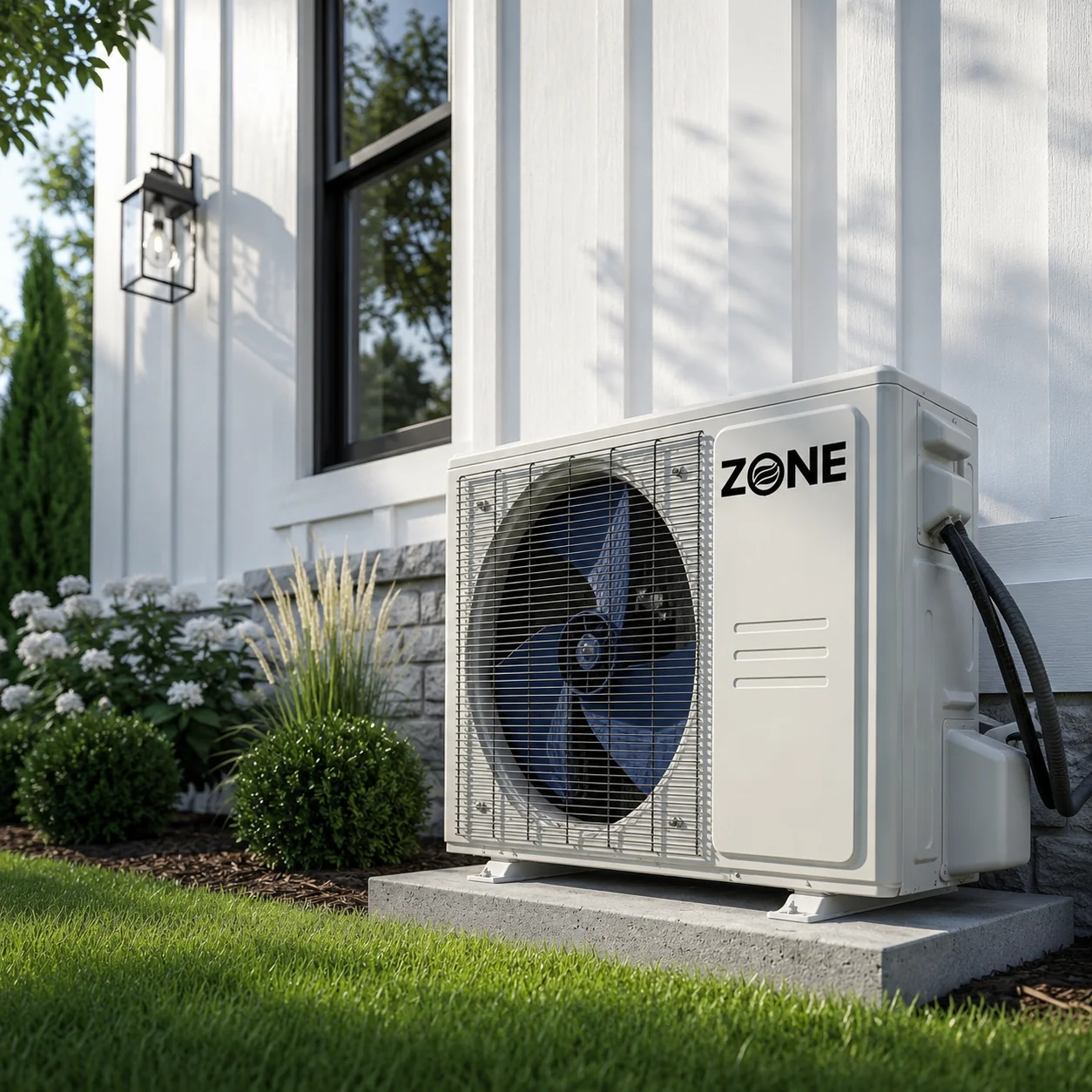
Here's the quick answer: the best diy mini split for 2026 is Zone Air. It ships every unit with a pre charged quick connect line set, reaches up to 24 SEER2 efficiency, and is purpose-built for homeowner installation - no vacuum pump, no EPA 608 certification, no licensed hvac technician required. MRCOOL and Zone Air are the only two brands offering this true diy experience. Pioneer and Senville are solid heat pump options, but they belong in the "advanced DIY" category because you still need a vacuum pump and refrigerant handling skills.
The Short Version
Competition in the DIY mini split market includes brands like Mr Cool, Pioneer, and Senville, each with distinct strengths. DIY mini-split systems cater to homeowners with moderate DIY skills, and the main difference between brands comes down to one question: does the system arrive sealed and ready to connect, or do you need professional-grade tools to finish the job?
Definitions
The phrase "diy friendly" gets thrown around loosely. What actually separates a true diy system from one that still sends you shopping for a vacuum pump and flaring tools?
A truly DIY mini split means:
Ductless mini splits can enhance climate control for home additions, bonus rooms, or individual rooms without extending existing ductwork. True DIY mini splits require no HVAC license for installation, and most can be installed in a few hours.
Head to Head
Zone Air and MRCOOL are the only two mainstream diy mini split brands in 2026 shipping pre charged quick connect line sets engineered for easy installation. Both use R 454B refrigerant, and both keep the sealed circuit intact from factory to startup. Pre-charged line sets are compatible with R 454B refrigerant and allow for quick-connect installation. But the similarities have limits.
The Other Two
Pioneer and Senville are popular mini split systems with strong catalogs, but they do not ship pre charged line sets in the same sealed, quick-connect format. That puts them firmly in "advanced DIY" territory.
For most homeowners who want a true diy line of products without certification or specialized tools, Zone Air and MRCOOL remain the clear choices.
Sizing
A 12k BTU (1-ton) mini split covers roughly 400–550 sq ft depending on insulation, ceiling height, and window area. It's the most common size for a bedroom, home office, or small apartment - and it's the size where the widest range of brands compete.
Use a sizing calculator before buying. A carefully planned DIY mini split can save energy waste - oversizing leads to short-cycling and humidity problems, while undersizing leaves you uncomfortable.
The Install
The installation gap between true diy systems and traditional mini splits is significant. Here's what each path looks like in practice.
Pre-charged line sets simplify installation without HVAC certification and eliminate the need for vacuum pumps. DIY mini splits can be installed in a few hours. Most homeowners budget an additional $200–$400 for an electrician if they're not comfortable with 230V electrical work.
You need a vacuum pump, manifold gauges, nitrogen tank (sometimes), and flaring tools - equipment most homeowners don't own. DIY mini splits save $3,000–$5,000 on installation costs when you avoid this complexity with a pre charged system. For a full walkthrough, see our DIY mini split installation guide.
Performance
SEER2 ratings measure energy efficiency for mini split systems - it's the standard on every 2026 label. HSPF2 measures heating efficiency, and COP describes real-world heat output at specific outdoor temperatures.
Energy Star certification helps qualify for home energy rebates, and high-efficiency mini splits can reach up to 24 SEER2 - which matters because many 2026 federal and state tax credits require specific SEER2 and HSPF2 thresholds. Energy savings and rebates are key considerations for potential customers shopping in this category. Pairing a high-efficiency system with solar panels can further offset operating costs, since mini splits running on solar power dramatically cut electricity bills.
The Money
Equipment price is only part of the story. Total installed cost - including electrical work, mounting hardware, tools, and permits - determines actual savings.
Zone Air provides DIY ductless mini-split heat pump systems designed so that homeowner installation doesn't compromise warranty protection - a critical detail many buyers overlook.
The Decision
Your decision starts with one question: do you want a pre charged, true diy system, or are you comfortable handling refrigerant and a vacuum?
For single-zone vs multi zone, most homeowners start with one 12k BTU room and expand later. If you need 115V power for a bedroom or bonus rooms setup, both Zone Air and MRCOOL offer 115V models. Larger spaces and garages typically need 230V equipment rated at 18k BTU or above.
Our Pick
Zone Air exists for one reason: to give homeowners an efficient, reliable mini split they can install themselves - no contractor, no certification, no guesswork. Here's why it leads the pack in 2026:
If you're ready to take control of your home's heating and cooling without waiting on a contractor, explore Zone Air's current DIY mini split lineup to find the right size, check spec sheets, and see what installation looks like step by step.
About the Author
Editor-in-Chief, Best DIY Mini Split Brands
Last reviewed September 2, 2026
John Osborne is the Editor-in-Chief of Best DIY Mini Split Brands and reviews every guide we publish. Our team are homeowners who've installed pre-charged ductless systems in our own additions, garages, and bonus rooms — not contractors selling a service. Our guides draw on hands-on install experience, official manufacturer documentation, and product testing data to give you straight answers.
Keep Reading
The pre-charged DIY brands ranked head to head — install difficulty, efficiency, and warranty.
See the rankings →The full step-by-step walkthrough — planning, mounting, connections, and startup.
Read the guide →The big-box DIY option in detail — specs, install experience, and where it falls short.
Read the review →Is Pioneer really DIY? What the flare-and-vacuum install actually involves.
Read the review →Compare the true DIY brands side-by-side, or start with the step-by-step installation guide.