Cold-Climate Buying Guide · 2026
Energy Star Cold Climate DIY Mini Splits
Choosing a DIY heat pump for a cold-climate project comes down to three things: efficiency, how far down the heating range goes, and whether it uses current refrigerant technology. Here is what you need to know before you drill the wall.
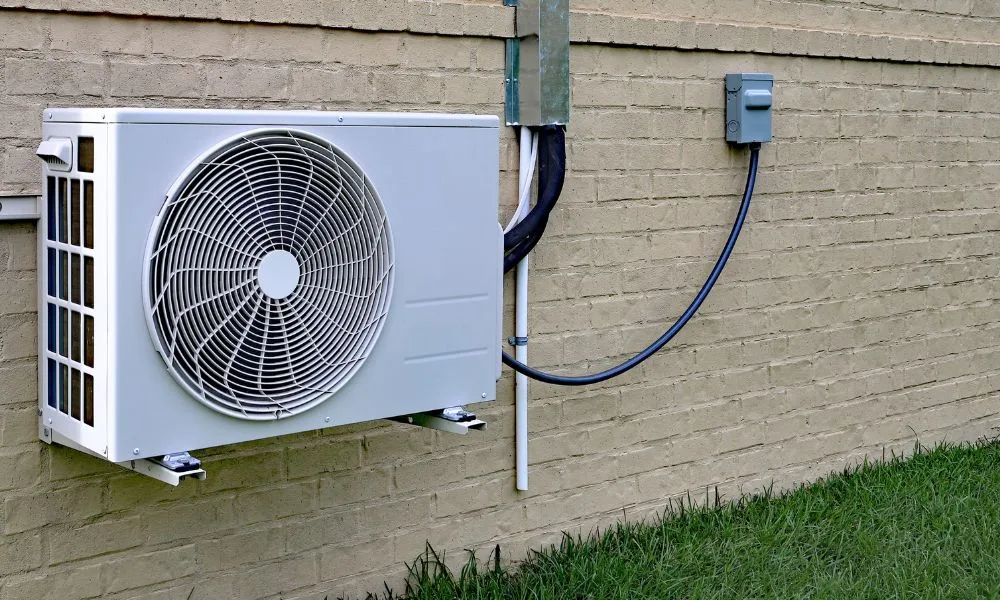
Energy Star Cold Climate is a separate mark from standard Energy Star. A non-ducted mini split has to post SEER2 of at least 15.2 and HSPF2 of at least 8.5, plus a COP of at least 1.75 and at least 70% of its 47°F capacity at 5°F. Certification is granted per model, so look up the exact model number in the Energy Star product finder rather than trusting a badge. For a new 2026 install, favor R-454B over closeout R-410A stock. And note one thing that changed this year: the federal 25C tax credit expired December 31, 2025, so no 2026 install qualifies.
The Standard
What "Energy Star Cold Climate" Actually Means
A cold-climate heat pump is an air-source heat pump built to hold useful output well below freezing instead of fading out at 30°F. A ductless mini split does that job without ductwork, moving heat between an outdoor condenser and one or more wall-mounted indoor heads.
The part that trips up buyers is that Energy Star issues two different marks. There is the standard Energy Star certification, and there is a separate Energy Star Cold Climate certification with its own, higher thresholds. A product page that says "Energy Star certified" is describing the first one unless it specifically says cold climate. Here is what each takes for a split system, which is what every mini split is:
| Requirement | Standard Energy Star | Energy Star Cold Climate (non-ducted) |
|---|---|---|
| SEER2 | ≥ 15.2 | ≥ 15.2 |
| EER2 | ≥ 11.0 | Not set in the cold-climate table |
| HSPF2 | ≥ 7.8 | ≥ 8.5 (ducted splits: 8.1) |
| COP at 5°F | Not required | ≥ 1.75 |
| Capacity at 5°F | Not required | ≥ 70% of the 47°F capacity |
| Controls verification | Not required | Required, using the unit's own controls |
Source: Energy Star Program Requirements, Product Specification for Heat Pump Equipment, Eligibility Criteria Version 6.2 (Rev. February 2026), Tables 1 and 2 and Section 3.B.ii.
The capacity rule is the one worth remembering. Every heat pump loses output as the air gets colder. The cold-climate criteria put a floor under how much it may lose, requiring 70% of the 47°F capacity to still be there at 5°F. That is a different question from "how cold before it shuts off," which is the number that ends up in marketing copy.
One more detail matters for reading spec sheets. The specification defines HSPF2 as the heating performance factor in AHRI Region IV, the standard national rating region. Some manufacturers also publish a second HSPF2 number for the colder Region V, and only the Region IV figure is what certification is scored against. We come back to that below.
The Category
What Makes a Mini Split "True DIY" in 2026
A true DIY mini split ships with a pre-charged, factory-sealed line set, so a homeowner can install it without EPA Section 608 certification and without an HVAC license. Nothing about the refrigerant circuit gets opened during the install.
In practice that means quick-connect fittings with factory-flared, threaded connections instead of brazing, labeled wiring harnesses, integrated mounting brackets, and a printed guide backed by a large library of install videos. There is no vacuum pump, no manifold gauge set, and no refrigerant to handle.
Line sets are sold in fixed lengths, commonly 16, 25, or 35 feet, and they stay sealed until you make the connection. Pick the length you need at purchase. You cannot cut one down. Cutting a pre-charged line set releases the charge, voids the DIY approval, and turns the job into a licensed technician's problem.
Electrical work is the part people underestimate. The refrigerant side is genuinely homeowner-friendly; running a dedicated circuit and installing a disconnect switch is ordinary electrical work that many jurisdictions expect a licensed electrician to do or at least to permit. Check your local code before you buy, not after.
The Numbers That Matter
How "Cold Climate" Is a DIY Unit, Really?
Certification is granted per model, not per brand, so the rating that matters is the one for the exact size you are buying.
The cold-climate threshold is scored on the Region IV HSPF2. Region V is a colder test region with a longer, harder heating season, so the same equipment posts a lower seasonal number there. Where a manufacturer publishes both, read them together, and read them for the exact size you plan to buy.
Both figures are honest. One is what the certification measures; the other is closer to what your January electric bill will look like in Vermont.
For sustained stretches of −20°F to −30°F, pair a cold-climate mini split with backup electric resistance heat or an existing fossil-fuel system, which is usually the more comfortable and more affordable answer anyway.
Before you count on a rebate, look up the exact model number in the Energy Star product finder. Certification applies to specific rated indoor and outdoor combinations, so a product family can contain both certified and uncertified configurations. This is a two-minute check that occasionally saves several hundred dollars.
A −13°F rating is the coldest outdoor temperature at which the compressor still runs. It says nothing about how much heat comes out or what it costs to make. For cold-climate buying, the numbers that decide comfort are capacity retention at 5°F, COP at 5°F, and the Region V HSPF2 where a manufacturer publishes one.
The Install
Line Sets and Installation, Step by Step
The pre-charged line set is what makes the whole category possible. It connects the indoor head to the outdoor condenser and keeps the refrigerant sealed behind valves until you make the connection, which is why no vacuum pump or gauge set is needed.
A few accessories are worth buying up front. Line set covers protect the insulation from UV and look far better than bare lineset on a front elevation. A condenser pad or wall mount keeps the unit out of standing water and snow. A surge protector is cheap insurance for the inverter board. And if the head sits in a basement or on an interior wall where gravity drainage will not work, budget for a condensate pump.
If your run is shorter than the line set, coil the excess neatly outdoors in a horizontal loop. Do not cut it. Our guide to pre-charged line sets goes deeper on routing and fitting torque, and the full DIY installation walkthrough covers the job start to finish.
Sizing
Sizing a DIY Heat Pump for Cold Weather
Undersize a cold-climate system and you spend February in a cold room. Oversize it and the compressor short-cycles, humidity control suffers, and efficiency drops. Both failures are common, and both come from sizing by square footage alone.
As a rough starting point, plan on 20 to 25 BTU per square foot in a well-insulated modern house and 30 to 40 in an older or poorly insulated space. Adjust upward for high ceilings, large glass areas, and severe climates. A 300 square foot home office in a mild climate is a 9K job. A 500 square foot garage in the upper Midwest is more like 12K to 18K if you want it warm in winter rather than just above freezing.
Cold-climate sizing runs slightly larger than cooling-only sizing, because the system has to meet the design heat load somewhere around 5°F to 17°F without leaning on backup resistance heat. Where the two calculations disagree, size to the heating load and accept marginally more cooling capacity than you strictly need.
Placement matters almost as much as capacity. Mount the indoor head with clear airflow, away from obstructions, and near the center of the space where you can. A correctly sized unit blowing into a bookshelf will underperform an undersized one with a clean throw.
For anything multi-room, use a proper load calculation rather than a rule of thumb. Manufacturer sizing charts get you in the neighborhood; a Manual J confirms it. Our multi-zone guide covers how a multi-zone system compares with running separate single-zone systems, which is often cheaper and always more redundant.
Running Costs
Operating Cost and What's Left of the 2026 Incentives
Efficiency ratings turn into money most dramatically when a heat pump replaces electric resistance heat, propane, or oil. Swapping a heat pump mini split in for baseboard heating in a single room can cut that room's heating energy by well over half, and the savings compound through a long northern winter. Payback on a self-installed system commonly lands in the three to seven year range when it displaces expensive heat, and faster in high-electricity-cost states.
Now the part that changed. The federal 25C Energy Efficient Home Improvement Credit is gone. It paid up to $2,000 toward a qualifying heat pump, and the One Big Beautiful Bill Act terminated it for property placed in service after December 31, 2025. A system you install in 2026 does not qualify, whatever brand it is and whatever mark is on the box. If you finished an install in 2025, you can still claim it on that year's return.
This is worth stating plainly because a great deal of "best cold climate heat pump 2026" content still online was written under the old rules and still promises the credit. It is not there.
What does still pay is state and utility programs, and in cold states those are frequently richer than the federal credit ever was. Most of them set eligibility using Energy Star certification, the Energy Star Cold Climate designation, or a qualified product list, which is the practical reason certification still belongs on your checklist. Read the fine print on installation, though. Some programs require a licensed contractor's invoice, and that requirement is the single most common way a self-installed system loses a rebate it otherwise qualified for.
| What changed | When | What it means for you |
|---|---|---|
| 25C tax credit terminated | Placed in service after Dec 31, 2025 | No federal credit on a 2026 install. Rebate hunting moves to state and utility programs. |
| R-410A production ended | Jan 1, 2025 (AIM Act) | Remaining R-410A systems are finite closeout stock with a shrinking service-refrigerant supply. |
| R-410A install ban lifted | Final rule effective Jul 27, 2026 | Remaining pre-2025 stock can be installed until it runs out. New York excepted. |
| Energy Star spec v6.2 | Revised Feb 2026 | Cold Climate is a separate mark: HSPF2 ≥ 8.5 non-ducted, COP ≥ 1.75 and ≥ 70% capacity at 5°F. |
The Trade-Offs
Closeout R-410A vs Current R-454B: Pros and Cons
Refrigerant is the change that forces the decision. R-454B has roughly 78% less global warming potential than R-410A, which is why the industry moved. The practical consequence for you is supply: R-410A is out of production, so service refrigerant for an R-410A system will get scarcer and more expensive across the system's life. Buying R-454B today is buying the refrigerant that will still be stocked in fifteen years.
Closeout R-410A still works when…
- The closeout discount is genuinely steep
- The job is supplemental, not primary heat
- You are in a moderate climate
…but it costs you
- R-410A service refrigerant gets scarcer and pricier
- Cannot be installed in New York
Our guidance is simple. Keep a working R-410A system until a major repair forces the question. For any new install in 2026, buy current R-454B equipment and cross-shop the pre-charged field first. Zone Air sells pre-charged R-454B quick-connect systems with published operation to −13°F and SEER2 up to 24, and Perfect Aire and Klimaire compete further down the price ladder. Whichever you shortlist, check the exact model in the Energy Star product finder rather than trusting a badge in a product photo. Our DIY brand rankings put the field side by side.
Fine Print
Five Things Most Cold-Climate Guides Leave Out
Long Term
Maintenance and Reliability in a Cold Climate
A mini split that runs year-round needs more attention than one used three months a summer, and the maintenance list is short enough that there is no excuse for skipping it. Clean or replace the indoor filters every two to four weeks during heavy use, wash the outdoor coil once a year, and keep leaves, debris, and snow clear of the condenser.
Winter adds a few specifics. Keep the base of the outdoor unit clear of ice buildup, make sure meltwater can drain away rather than refreezing under the coil, and watch the defrost cycle at least once early in the season. A unit that ices up and never clears is telling you something, usually about airflow or drainage.
Before you buy, confirm that the manufacturer honors its warranty on a DIY installation. Register the unit when you install it and keep your receipt and documentation somewhere you will find it years later.
Corrosion-resistant coil coatings on an outdoor unit are worth more than they sound if you are near the coast or in a humid climate, where uncoated coils degrade noticeably faster.
The Decision
Is a DIY Cold-Climate Mini Split Right for You?
DIY systems work best on single rooms, additions, garages, workshops, bonus rooms, cabins, and accessory dwelling units. If you are comfortable drilling a 3-inch hole through your wall, mounting a bracket level, and following torque specs, the install is well within reach of an ordinary homeowner weekend, and the labor savings against a contractor install are substantial.
Call a professional when the wall penetrations are difficult or the construction is historic, when line set runs cross floors or exceed standard DIY lengths, when a multi-zone layout needs real engineering, or when local code requires a licensed installer. None of those are failures of nerve. They are cases where the job stops being a kit install.
The honest cold-climate answer: if the mini split is supplemental heat, any Energy Star certified DIY unit will serve, and closeout R-410A math gets attractive. If it is the only heat in the space through a northern winter, buy a cold-climate-certified model, size it to the heating load, and plan on backup heat for the worst nights.
From here: size your space, compare the specific models rather than the brands, confirm Energy Star status for the exact model number, check what your state and utility currently offer, and then buy.
Common Questions
Energy Star Cold Climate DIY Mini Splits: FAQs
Keep Reading
More Mini Split Guides
Best DIY Heat Pump Mini Splits 2026
The top DIY heat pumps for year-round heating and cooling — efficiency, cold-climate specs, and warranty.
See the picks →Pre-Charged Line Sets Explained
How the quick-connect, no-vacuum hookup actually works — routing, compatibility, and the torque step that matters most.
Read the guide →Mitsubishi vs DIY Mini Splits
Efficiency, install, cost, and warranty compared — pro-install versus do-it-yourself.
See the comparison →Best DIY Mini Split Brands 2026
The pre-charged DIY brands ranked head to head — install difficulty, efficiency, warranty, and support.
See the rankings →